
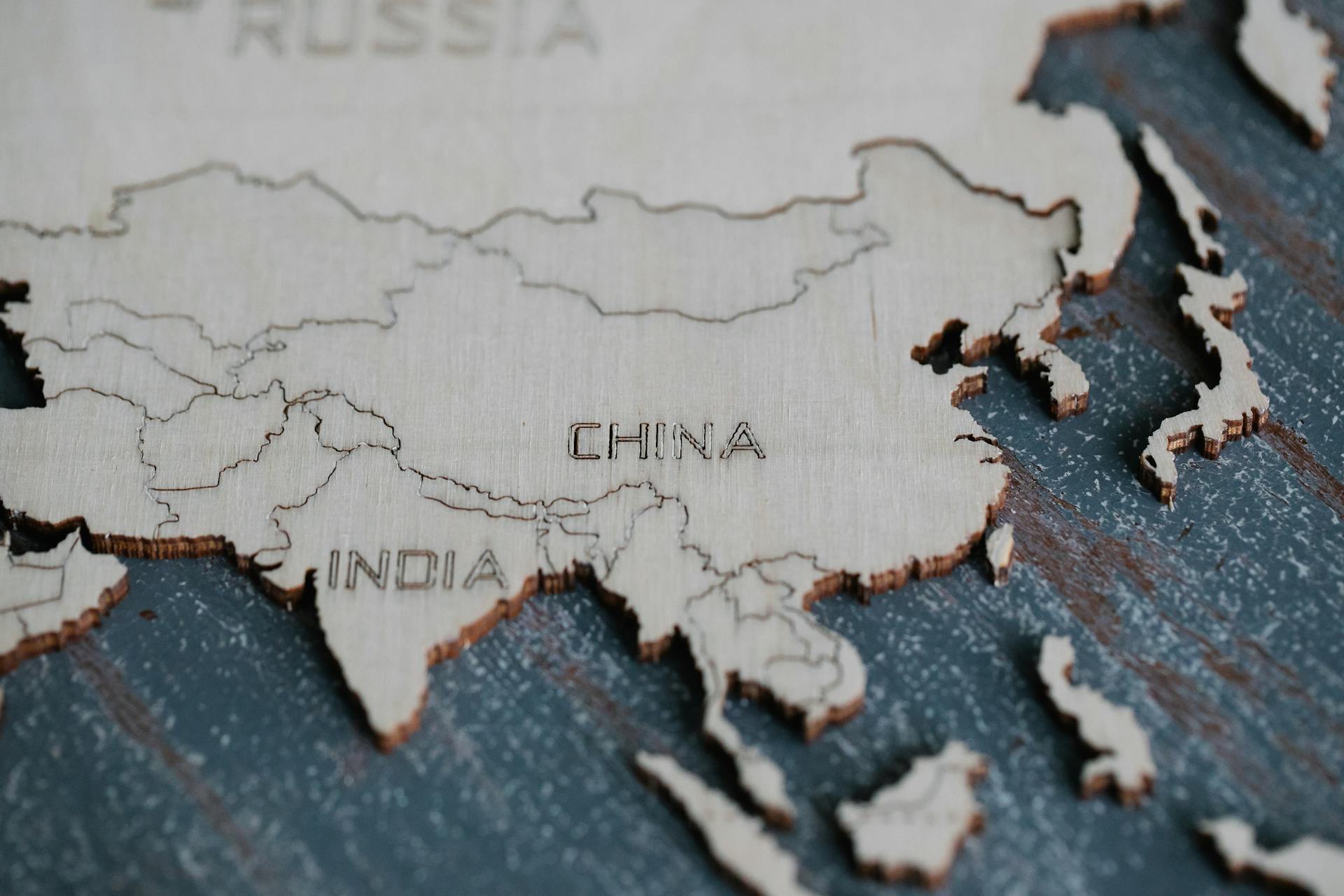
It’s a world where the library door is one country and the reading room is another. Or the village where entering your neighbor’s driveway is akin to crossing an international border. They’re not what-ifs, actual examples of the world’s most absurd borders.
From medieval battles across the border to colonial cartographers drawing boundaries on kitchen tables, these absurd world borders bring people’s everyday dumbness to life. Unraveling how they came to be that way is a complex history of wars, treaties, and geological events that mapmakers still try to sort out today.
Baarle: The Town of 30 Borders
Baarle-Nassau (Holland) and Baarle-Hertog (Belgium cut the world’s most fragmented border. The village comprises 30 separate enclaves, some of which are in the Netherlands and in Belgian territory, and vice versa. Even some of the Belgian enclaves have their own, albeit small, Dutch counter-enclaves.
Walk down a street and you’ve crossed the border six or seven times already. They cut through houses between countries; one coffee shop has the border cut through its property, marked by crosses on the ground. Citizens get to choose which country to tax themselves in, depending on whether their front door is there.
Strange places in this deal
- Many charges, regulations, and even COVID regulations are a few feet away
- Belgian shops were open on Sundays, but not the Dutch shops
- Police authority depends on which side of a building one is angry
It began all those centuries ago in medieval times, when locally there were exchanges of land between the Duke of Brabant and the Lord of Breda in complex feudal transactions. Nobody ever believed these colonies would become permanent, international, and immovable frontiers centuries down the line.
Read More: The Real Pirates Who Inspired Hollywood Legends
India-Bangladesh: The Enclave Nightmare
India-Bangladesh had 162 enclaves, one country’s land surrounded by another country, completely until 2015. Indians possessed the Indian land of Bangladesh, which was itself surrounded by Indians. These were enclaves of enclaves of enclaves.
The Dahala Khagrabari was the world’s only third-order enclave: Indian territory inside a Bangladeshi enclave, inside an Indian enclave, inside Bangladesh. People living there had to traverse four international frontiers just to reach their own mainland nation.
Example: These children were kept out of the neighbor’s hospitals and schools. They lived comfortably in India but were unable to enter Bangladesh without breaking the law. No mail service, no vote, no legal status, stateless.
This strange sight was the consequence of a 1713 agreement between territorial chiefs who had bet land on a game of chess. Two hundred years of surveying trash afterward, the 2015 Land Boundary Agreement eventually exchanged these enclaves.
Read More: What We Know About Lost Civilizations Under the Sea
Other Boundary Anomalies Around the World
The Haskell Free Library and Opera House straddles the US-Canada border, spanning from Vermont to Quebec. The door is in the US, the reading room in Canada. A black line indicates where the border cuts the floor; actors use two countries as a stage.
Point Roberts, Washington, is U.S. land, but one must access it via a drive through Canada. Locals drive 25 miles in a foreign nation to access the remainder of Washington state.
The Korean Demilitarized Zone is a village where South Korean and North Korean buildings glare at one another along a line that civilians do not even approach. Shells of success on both sides, propaganda villages constructed to appear lived-in but unoccupied.
You just toured the world’s most ridiculous borders: 30-piece towns divided in two, three-level deep enclaves, and libraries along two countries. These ridiculous foreign borders are not blueprints rejected; now they are signposts of treaties written when no one had even thought about modern nation-states or customary crossing of the line.
Every ridiculous border is the story of medieval land swapping, colonial cartography, or diplomatic finagling. And the next time you’re flying down a straight rational divide, thank God that somewhere in the world there are people dividing up their countries on the basis of which room they just happen to be in.
Read More: The Town That Vanished Without a Trace


