
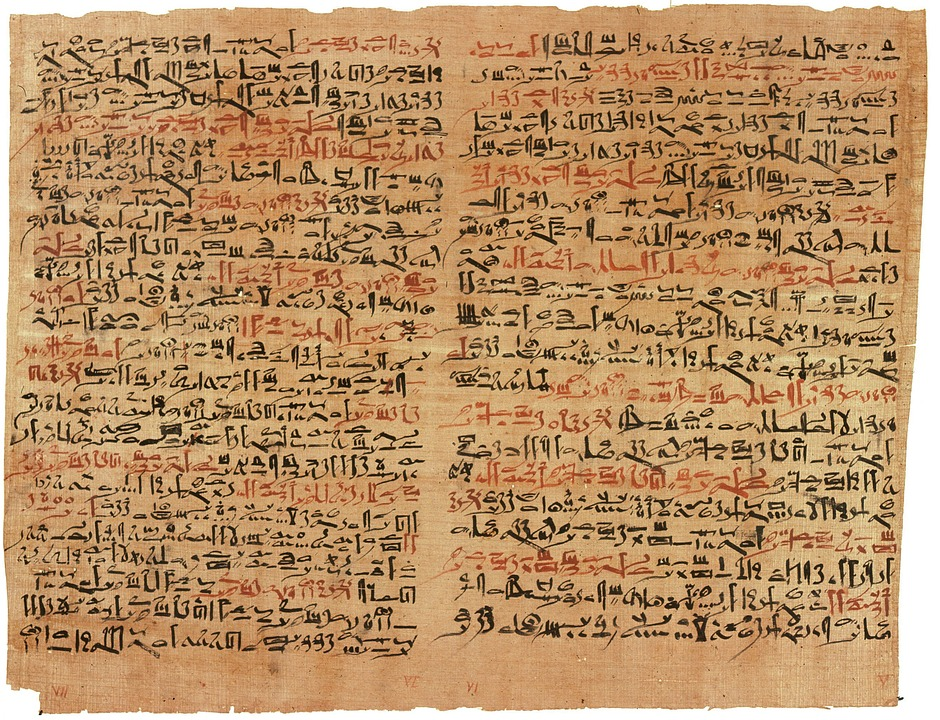
Few historical tragedies capture the imagination like the burning of the Library of Alexandria. This legendary center of ancient knowledge, which, according to popular belief, vanished in a single devastating fire. For centuries, people have mourned it as the moment humanity lost the wisdom of the ancient world.
But the truth is more complex. The Library of Alexandria didn’t burn once—it declined over centuries, undone by politics, war, and neglect. Its story is less about flames and more about fragility: how easily knowledge can disappear when civilizations stop protecting it.
The Greatest Library of the Ancient World
Founded in the 3rd century BCE under Ptolemy I and II in Egypt, the Library of Alexandria was part of a larger institution known as the Mouseion, or “Temple of the Muses.” It wasn’t just a building; it was a research hub that attracted scholars from across the Mediterranean. Historians believe it housed hundreds of thousands of scrolls containing works of philosophy, mathematics, astronomy, literature, and medicine.
The library’s mission was ambitious: to collect all the world’s knowledge. Ships docking in Alexandria were reportedly searched for manuscripts, which were copied and stored. The library became home to thinkers like Euclid, Eratosthenes, and Archimedes, whose work laid the foundations of science and mathematics for centuries to come.
Yet, its grandeur also made it vulnerable. Alexandria was a prize city: politically powerful, culturally influential, and often caught in the crossfire of empire.
Check out The Forgotten Origins of Common Phrases We Use Every Day to see how language preserves history.
The Fires That Changed History
The first and most famous destruction came in 48 BCE, when Julius Caesar set fire to his own ships during a civil war against Ptolemy XIII. The flames spread to nearby docks and warehouses, which may have contained part of the library’s collection. Ancient writers like Plutarch described the catastrophe, though historians disagree on how much was truly lost; some say only the external storage was lost, while others claim the core library was devastated.
But that was only the beginning. Over the next six centuries, Alexandria faced repeated turmoil: invasions, regime changes, and religious conflicts. The Serapeum, which housed the library’s “daughter collection,” was destroyed by Christian zealots in 391 CE, when pagan institutions were suppressed under the Roman Emperor Theodosius I. Later, during the Arab conquest in the 7th century, remaining scrolls may have been lost through neglect or deliberate destruction, though records from that era are conflicting and fragmentary.
Rather than one cataclysmic fire, the Library of Alexandria likely faded through a series of losses, each wave erasing a little more of the ancient world’s memory.
See The Secret Symbols Hidden in Medieval Art for how meaning survives through imagery when texts are lost.
Why the Loss Still Resonates
The Library’s destruction endures as a symbol because it represents more than a physical loss. It stands for the vulnerability of knowledge. When ideas depend on fragile materials and fragile institutions, they can vanish overnight. The fall of Alexandria reminds us that wisdom isn’t just discovered—it must be defended, preserved, and passed on.
Modern scholars see parallels in today’s world. Digital data, though vast, is equally fragile. Data stored on servers is vulnerable to decay, obsolescence, or censorship. Just as scrolls crumbled or burned, information now risks disappearing into the void of lost passwords, corrupted files, or outdated formats. The “digital dark age,” some experts warn of, echoes the same danger Alexandria faced: the slow erosion of human knowledge.
Yet, there’s a hopeful legacy too. The dream of Alexandria lives on in modern libraries, archives, and open-access projects like Wikipedia and the Internet Archive. These are today’s digital Alexandrias, global efforts to safeguard knowledge against time, disaster, and indifference.
The Library of Alexandria may have burned, but its spirit didn’t die. It simply evolved. Every book preserved, every byte of data archived, is a quiet act of defiance against forgetting.
Explore How a Volcano Once Changed the Entire World’s Climate to see how single events ripple through history.