
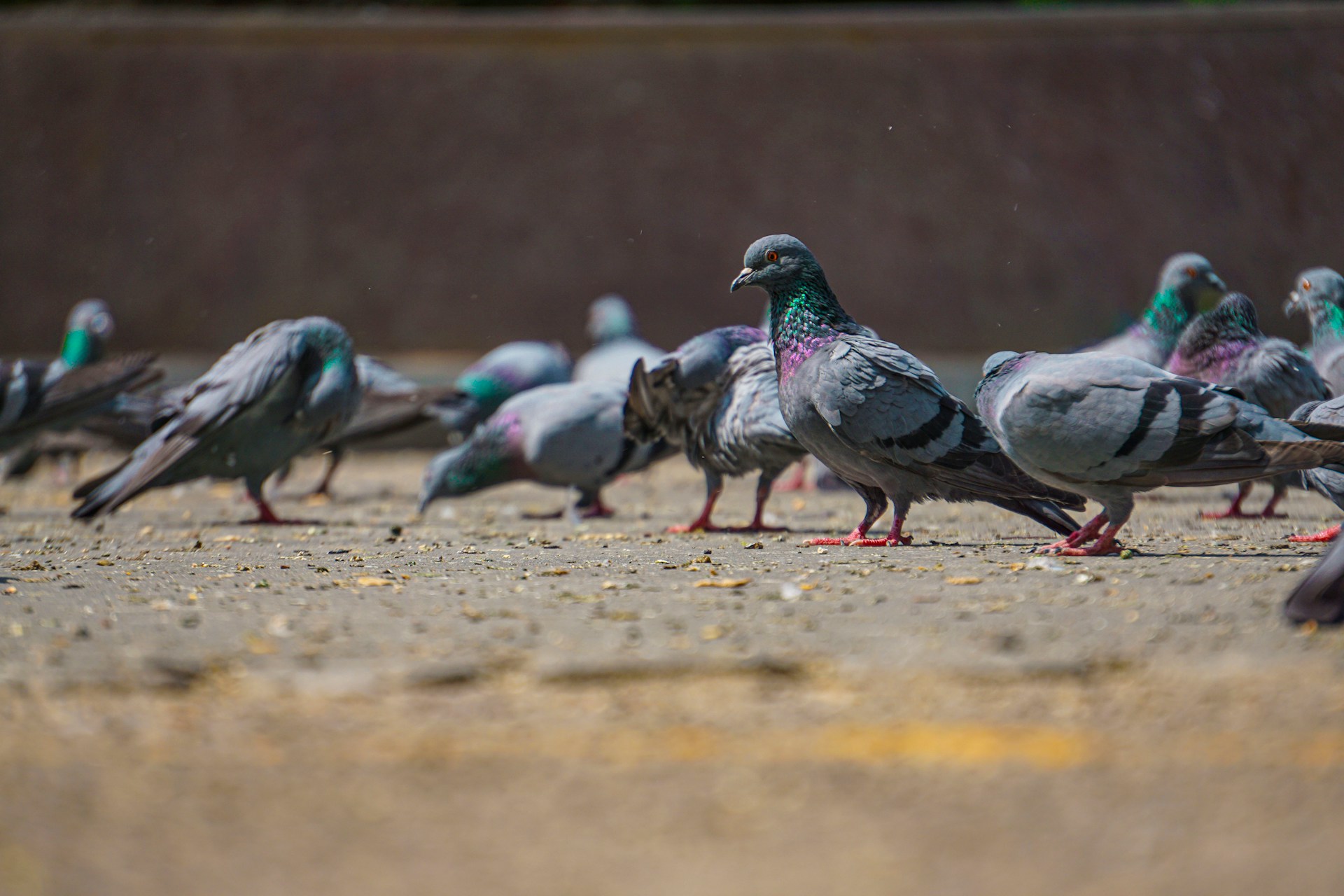
History textbooks are full of generals, inventors, and politicians, but some of the most important moments in civilization depended fully upon animals. Animals have shaped human history in ways much stranger than anything you learned about in school. One pigeon, Cher Ami, saved 194 soldiers despite losing an eye and a leg.
Cats quite literally enabled ancient Egyptian dominance by protecting grain stores from rodents. Dolphins detected underwater mines, saving countless naval personnel. These are not heartwarming sidebars; these are instances when animal behavior directly altered the course of wars, economies, and entire civilizations.
Carrier Pigeons: The Original Wireless Communication
Before radio, satellites, or cell towers, the carrier pigeon was the most reliable long-distance communication system available. In World War I, when all other means of communication were severed, pigeons carried messages through poison gas and gunfire at 95% success rates.
Cher Ami was a British-bred pigeon serving with U.S. forces that gained legendary status during the 1918 Meuse-Argonne Offensive. The so-called “Lost Battalion” of 194 men was behind enemy lines, being shelled by its own artillery due to incorrect coordinates. Cher Ami arrived with one leg hanging by a tendon, a severe chest wound, and after flying 25 miles in 25 minutes through heavy fire. The message capsule attached to that damaged leg contained coordinates that stopped the friendly fire and, in the end, saved the battalion.
Key contributions of the military pigeons:
- 32 pigeons were given the Dickin Medal, “animal’s Victoria Cross” during WWII
- G.I. Joe warned of a planned bombing in Italy, which saved the lives of 1,000 British soldiers.
- With the failure of all electronic systems, messages travelled at 60 mph with near-perfect reliability
Read More: The Craziest Coincidences in History
Cats, Grain, and the Rise of Civilizations
The dominance of Ancient Egypt was not solely composed of the pharaohs and pyramids, but also involved cats. Among the animals that have inspired human history are felines, which enabled the storage of grain, thereby directly facilitating population growth and economic power.
Because they preyed upon rodents that feasted on stored grain, wild cats began to congregate around early agricultural settlements in the Fertile Crescent 10,000 years ago. Farmers who tolerated such cats benefited from dramatically lower grain loss. Egyptians formalized this relationship by domesticating cats and eventually declaring them sacred. The result was a revolutionary grain surplus that funded armies, monumental architecture, and trade networks.
Archaeological evidence from ancient Hierakonpolis indicates that grain stores with cat remains had 80 percent less rodent damage than those without. This protection directly translates to food security, enabling Egypt to maintain larger populations and more complex societies than neighboring regions grappling with pest-related crop losses. No cats, no Egyptian empire, at least not at the scale history remembers.
A look at how animals shaped human history makes clear that the arc of civilization hinged on much more than just human ingenuity. From carrier pigeons, whose message-carrying capabilities changed the outcomes of battles, to cats that enabled the accumulation of agricultural surpluses to build empires, animal behavior has quietly influenced the course of wars, economies, and societies.
The next time you see a pigeon or a house cat, remember that they descend from creatures who not only witnessed history but also made it. These relationships, in turn, underscore a profound insight: History is truly a multi-species collaboration.
Read More: History’s Weirdest Coincidental Inventions