
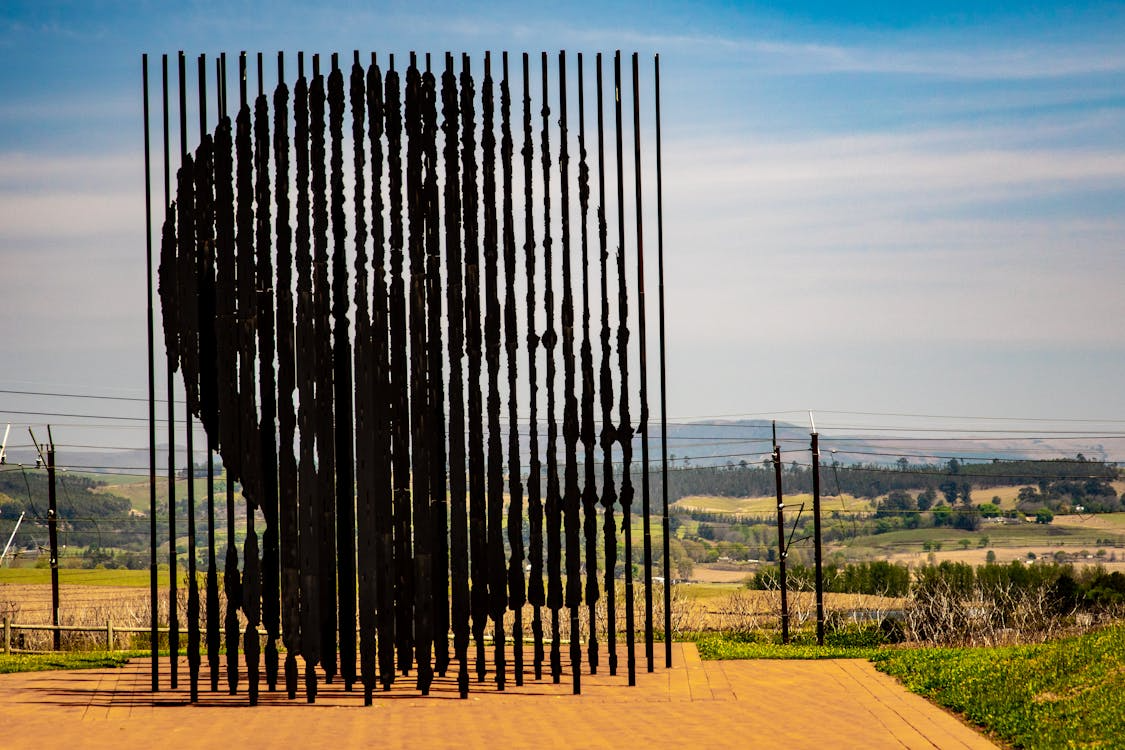
Have you ever been convinced you remember something, only to find out you’re completely wrong, along with thousands of other people? That’s the mysterious pull of the Mandela Effect examples we see everywhere. It’s a psychological phenomenon where large groups of people share the same false memory. Named after Nelson Mandela, who many falsely recalled dying in prison in the 1980s, it challenges our confidence in memory itself.
Scientists and psychologists have long been fascinated by why the human brain can feel so sure about something that never happened. From movie quotes to brand logos, these mental mix-ups reveal as much about how our minds work as they do about the collective stories we tell ourselves.
The Origins of a Shared False Memory
The term “Mandela Effect” was coined in 2009 by paranormal researcher Fiona Broome, after she discovered that many others shared her false recollection of Nelson Mandela’s death decades before it actually occurred. This wasn’t an isolated case. People online began comparing similar memory glitches, uncovering hundreds of examples where large groups were equally mistaken.
Some of the most famous cases include:
- The Berenstain Bears, remembered by many as “Berenstein.”
- Darth Vader’s line in Star Wars, often recalled as “Luke, I am your father,” instead of “No, I am your father.”
- The Monopoly Man supposedly wearing a monocle (he doesn’t).
- People remembering the fruit logo on Fruit of the Loom, having a cornucopia behind it (it never did).
Psychologists explain that the Mandela Effect isn’t proof of alternate universes or timeline shifts, but rather a feature of how human memory reconstructs information. Each time we recall a memory, we recreate it, mixing personal experience, cultural references, and expectations. Over time, details morph, merge, or vanish entirely.
Check out The Hidden History of Everyday Superstitions for more on how culture shapes belief.
Why the Brain Gets It Wrong
Memory isn’t like a video recording. It’s more like a patchwork quilt made of impressions, emotions, and fragments of real events. When our brains try to fill in missing pieces, we sometimes rely on logic or context rather than accuracy. For instance, we assume the Monopoly Man must have a monocle because he looks like other wealthy cartoon figures who do. Or we think the Berenstain Bears should be spelled “-stein” because that’s the more familiar suffix in Western names.
Researchers point to two psychological mechanisms behind this:
- Confabulation, where the brain fills in memory gaps with plausible but false details.
- Social reinforcement, where repeated sharing of the same false idea strengthens group belief. This is especially true online, where collective repetition can override evidence.
Add to that the influence of pop culture, memes, and nostalgia, and it’s easy to see why so many of us end up remembering the same “wrong” thing.
For eerie historical parallels, read The Mystery of Sleepwalking Soldiers in History.
The Internet’s Role in Strengthening False Memories
Before social media, false memories might have stayed private or localized. Today, the internet acts as an amplifier. Platforms like Reddit and TikTok turn these shared errors into viral phenomena. When someone confidently states, “I swear it used to be Berenstein,” others’ brains light up in recognition, creating what psychologists call collective reinforcement. Each confirmation feels like proof, not error.
Neuroscientists also note that digital repetition mimics memory rehearsal. The more we see a false claim repeated, the more familiar, and thus, more believable it becomes. This phenomenon, known as the illusory truth effect, explains why even well-informed people fall for misinformation or urban legends.
But the Mandela Effect isn’t just a cautionary tale. It’s also a reminder of how connected our minds are. Shared memories, even wrong ones, reveal the human desire for pattern, story, and belonging. In a way, they show that we remember not just as individuals, but as a culture.
See How Algorithms Decide What You’ll See Next to learn how repetition online reinforces false memories.